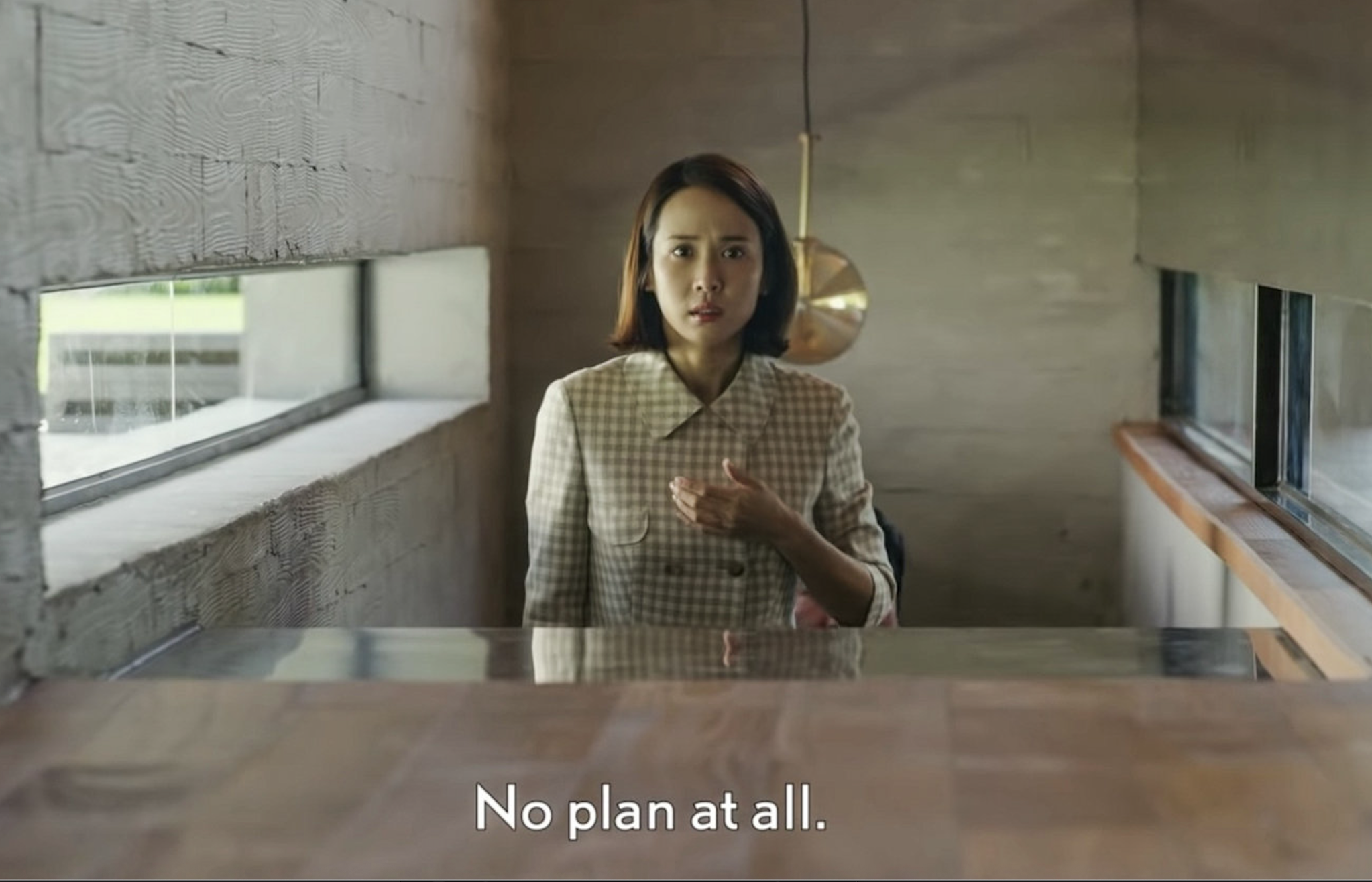
 Parasite is currently my all time favorite movies out of the many I’ve watched (this is sarcasm, the only movie I remember watching is the Minecraft Movie), and I thought to write something on it…
This is the script for a youtube video, linked here: https://youtu.be/G5xCdKx4g5I
Warning: Do not read if you have not watched Parasite! Serious spoiler alert.
Parasite begins as a comedy… and ends somewhere else entirely.
At the very beginning, we watch the Kim family crouched in their semi-basement apartment, holding up their phones toward the ceiling, searching for stolen wifi. This situation, to us, seems absurd: grown adults are performing this mildly demonic ritual just for a taste of internet access. Yet, while we laugh, this joke sits on top of the humiliation: we laugh at the Kims’ poverty, not with them.
Forms of humor, throughout history, aim to bring joy — from those in movies to cracking jokes with friends. Jokes are often made by subverting expectations, by setting up one outcome and delivering another. From Charlie Chaplin’s factory mishaps in Modern Times to the gravity-defying stunts of Sherlock Jr., slapstick depends on exaggeration and consequence without cost: someone slips, falls, gets hit with a pie, and we laugh because we register, “this isn’t serious.” The pain feels scripted and unreal, supported by silly sound effects — the character always pops back up. In other words, slapstick needs distance. We need to feel removed from the pain, and this is the very thing that Parasite plays with.
Early in the film, the movie uses these slapstick moments to feel choreographed, playing out in front of us as we admire the Kim family’s clever thinking.
For example, the peach-fuzz plan feels very theatrical, and every move seems clean and deliberate, supported by the quick editing, glances, and slo-mo shots. We don’t see the consequences of the Kims’ actions. There is a hierarchy of knowledge: the Kims understand the mechanics of the scheme before we do. That gap doesn’t create fear because knowledge is control. When characters are ahead of us, we trust them. We’re invited to sit there from a distance (backed up by the wide shots) and watch the scene unfold, confident in the success of their plan. It feels like a caricature: the staged infiltration of a system that doesn’t reward merit anyway. The Parks only care about references from people in their own circle, leading to their eventual demise, so this feels like an exposure of hypocrisy.
The hierarchy of knowledge mentioned earlier collapses as the movie progresses. At first, the Kims are ahead of us. Then, we catch up. By the time they’re drinking in the Parks’ living room, we share their false sense of security. Bong shifts from rapid, rhythmic editing to sustained takes: the camera lowers to their level, the scene runs long and unedited, the music stops, and we are put into their perception of time. We laugh at them, and it feels almost like an invasion of their personal space. We feel uncomfortable, and fear too (maybe for the first time). This is the first moment in the film without fast-paced, heavy action, and the lights are dimmed. This time, we aren’t confident that everything will go according to plan: we are as unprepared as they are.
Then, the doorbell rings.
When we see the housekeeper drenched outside, the humiliation registers. We realize that the housekeeper isn’t a villain (we root for the Kims, but we realize there isn’t a clear distinction between the “good guys” and the “bad”); she is another worker, much like the Kims, who will now be unemployed. The Kims, once middle-class themselves, are exploiting someone more vulnerable. Inequality doesn’t just flow from top to bottom; it circulates, as people equate status with dignity, turning dignity into something scarce. The laughter catches in our throats, and we feel uncomfortable at finding something so humiliatingly funny.
Bong further pushes this to its limits: the old housekeeper pushing the cabinet aside plays as absurd, which triggers nervous laughter. There’s something almost cartoonish about this reveal. But Bong does something critical: he removes the musical cues that tell us how to feel. We are hearing exactly what the family is hearing, and this silence forces us to confront that her desperation is real rather than enjoy the spectacle.
When the physical fight erupts in the living room: bodies tumble down stairs, phones are used almost like weapons, and the return of the peach fuzz… it almost seems like a reprise of earlier jokes. For a split second, the chaos feels like a farce, almost ludicrously funny. But then the camera lingers on the Kims’ faces, and we see not exaggeration but fear. They are desperate and humiliated. Whatever humor remains is further hollowed out by the recognition of what they stand to lose and how much they have already been degraded.
The distance that once allowed us to laugh is gone. The camera grows unsteady — when walking down the stairs, it is as shaky as if someone were actually holding the camera. It forces proximity to the characters and their feelings. It feels painfully real.
By the time we reach the garden party, we are no longer spectators, but we view the scene from Mr. Kim’s perspective. The camera also isolates Mr. Kim, holding on to his expression: we see the buildup of resentment in his face. Ironically, there is a “pie in the face” moment (the guests’ faces are covered with frosting), but we don’t laugh. When violence erupts, there is no comedy.
The role of humor is not simply to entertain. It invites us to laugh at the Kims, at the absurdity of it all, until Bong gradually shames us into being morally aware.
At the beginning of Parasite, we expect a clever underdog story or a chaotic infiltration plot as the Kims slowly rise to power. The Kims’ small indignities feel like an extension of this arc, reversible, even funny. But by the end of the movie, we’re hit with the brutal reality of the Kims’ situation: the humiliation is no longer comedic, but systemic and inescapable.
Bong turns the laughter back on us as we’re forced to confront how easily we find structural injustice amusing (entertaining, even) as long as it looks like a joke, challenging us to examine our own complicity in finding dignity negotiable.